How To Build a SaaS Brand (From Ground Up)
Learn how to build a powerful SaaS brand from the ground up. This step-by-step guide covers naming, positioning, messaging, tone of voice, visual identity, and more.

A powerful SaaS brand starts with clear decisions about who you are, who you serve, and how you show up visually and verbally. With rapid software-as-a-service industry growth brought on by the rise of AI-coding platforms, building a strong, unique and authentic brand is more crucial than ever.
This step-by-step guide walks through the core building blocks of building a SaaS brand: naming, positioning, messaging, tone of voice, and visual identity, so you can build a SaaS brand that actually sells your product instead of just decorating it.
Ready to tailor your strategy? Book a call
How To Build a SaaS Business Brand From the Ground Up
Step 1: Clarify your brand foundations with market research
Before logos or taglines, get your strategic basics straight: purpose, audience, and value. Without this, any later work on naming or design will feel arbitrary and be harder to maintain.
- Define your mission in one punchy sentence: what problem you solve and why it matters.
- List 3–5 core values that should shape how you build, sell, and support your product.
- Describe your primary audience: specify your target market and target audience by detailing their role, company size, industry, and the key pain points they experience, as well as what “success” looks like for them.
Treat this as your internal north star; everything that follows should feel like a natural expression of these foundations. Conduct thorough market research to validate your assumptions about your target market and their pain points, ensuring your SaaS brand is built on real customer needs and opportunities.
Step 2: Get your positioning directionally right
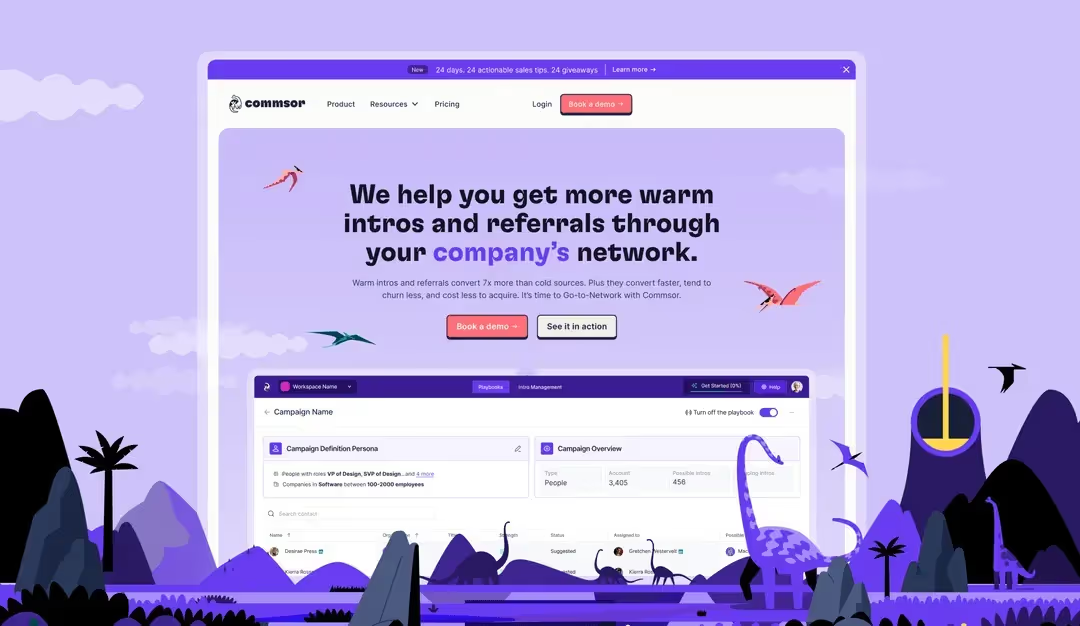
SaaS brand positioning is all about how your product sits in your buyer’s mind versus alternatives—“for whom, solving what, in what distinct way.” Your SaaS idea needs to be positioned clearly in the market to stand out. Founders do not need a perfect positioning statement on day one, but they do need a sharp working hypothesis that defines their core value proposition and relative positioning.
A simple early-stage positioning canvas:
- Who it’s for: your most valuable, highest-fit segment of potential customers.
- Their main jobs and pains: what they’re actually trying to achieve and where they’re stuck.
- Your key differentiators: 2–3 capabilities that matter to that audience and aren’t commoditised, such as a unique pricing model.
- Your proof: early results, workflow improvements, technical advantages, or how you demonstrate perceived value to your audience.
From here, draft a one-sentence positioning line you can refine over time; then link out from your article to your deep-dive brand positioning guide as “the next step” once founders have this first draft in place.
Step 3: Choose a name that can grow
Your name is often the very first brand decision with lasting consequences, so aim for “clear, distinct, and flexible,” not “clever but confusing.” For SaaS in particular, the name has to work in UI, URLs, sales decks, and conversations. When exploring names:
- Prioritise clarity over creative puns: can a stranger guess the category or feel from the name alone?
- Check basic availability early: domains, trademarks (at least in your main market), and clashes with major competitors or other SaaS providers.
- Say it out loud: it should be easy to pronounce, spell from hearing, and shorten if needed.
Once you have a shortlist, sense-check each option against your positioning: does it feel like it belongs to the same “universe” as your promise, audience, personality, and overall brand story?
Step 4: Craft your core value proposition and messaging
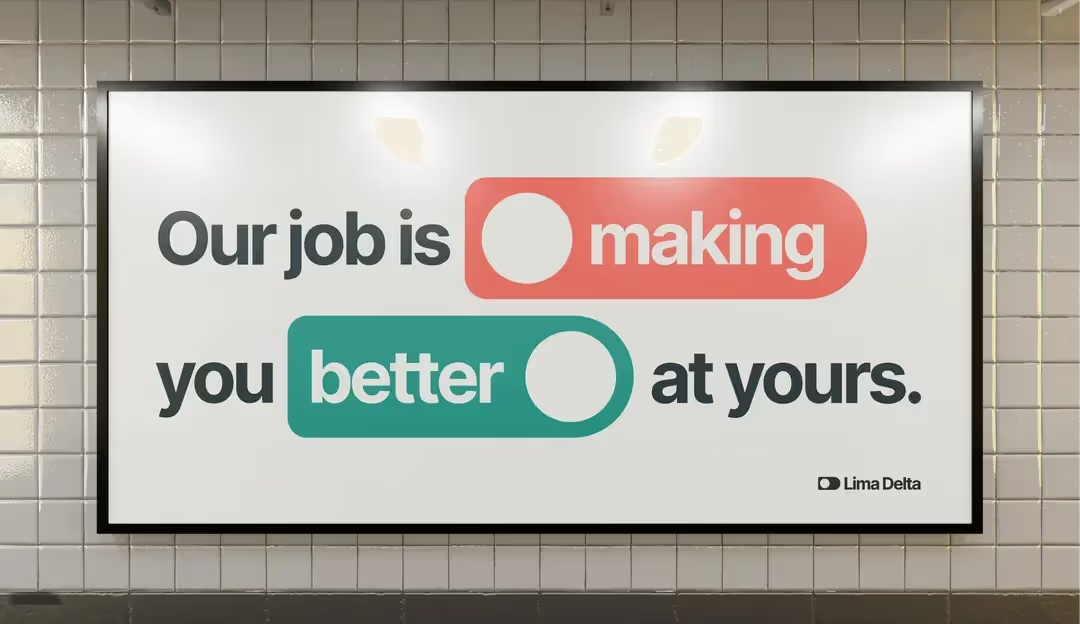
Messaging translates your positioning into words people actually see: on the homepage, pricing page, sales decks, onboarding flows, and during customer onboarding. Core messaging is a foundational part of your overall sales and marketing strategy, ensuring consistency and clarity across all customer touchpoints. The goal is a tight set of reusable “building blocks,” not one-off clever lines. At minimum, define:
- One-line value proposition: who you help, what outcome you deliver, and how you’re different.
- Three supporting proof pillars: e.g. “Save time,” “Increase revenue,” “Stay compliant”—each backed by features and soft proof like social proof or early metrics.
- A short problem–solution narrative you can reuse in demos, emails, and landing pages.
Effective messaging is crucial for lead generation and to attract users, helping to draw in prospects and convert them into active customers.
From there, direct readers to your detailed brand positioning/messaging article as the “advanced” version of this, with frameworks and templates for refining each layer.
Step 5: Define your brand personality and tone
Your tone of voice is the “human” layer that turns functional messaging into something memorable and trustworthy. For SaaS, the sweet spot is usually confident, clear, and approachable. Less of a buzzword salad, more of a smart teammate.
A consistent tone of voice helps to effectively market your SaaS product by building trust and recognition with your audience. In fact, brand consistency can increase revenue by 10-20%. SaaS marketing relies on a clear and consistent brand personality to support targeted content and lead generation efforts. Create a simple tone-of-voice mini-guide:
- 3–4 personality traits (for example: “curious, straight-talking, optimistic, technically sharp”).
- Do/Don’t examples: one line of “how we say it” and “how we don’t” for each trait.
- Guardrails: where you flex tone (e.g., more playful in product tours, more sober in legal or security pages).
This makes it much easier to brief writers, agencies, and even AI tools, and it keeps your brand sounding like the same company across website, product, sales, and support.
Step 6: Align visual identity with strategy
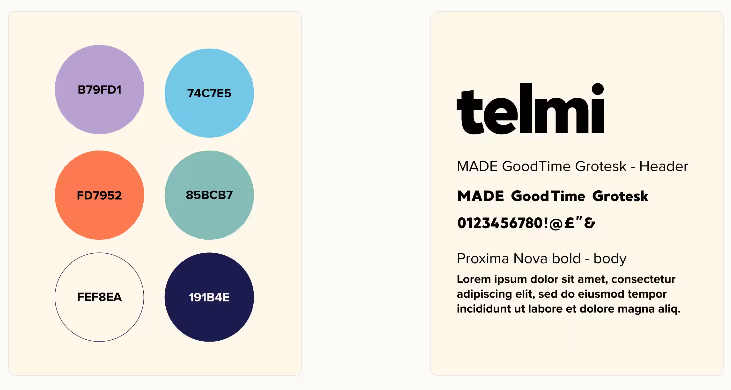
Visual identity (logo, colours, type, and basic layout rules) should echo the positioning and personality you’ve already defined. B2B and SaaS brands particularly benefit from systems that are simple, scalable, and easy to apply across UI, marketing, and docs. Your visual identity needs to be consistent across all SaaS apps and software applications, ensuring a unified look and feel wherever users interact with your brand.
Scalable design systems are especially important for SaaS platforms, as they support growth and maintain brand consistency as your product evolves. For a first-pass visual system:
- Logo: aim for a simple mark or wordmark that works at tiny sizes and in-product; avoid overcomplicated symbols.
- Colour: pick a primary brand colour, 1–2 supporting accent colours, and a neutral palette for UI backgrounds and text.
- Type: choose one main typeface (plus maybe a secondary) that is legible in product screens and flexible enough for marketing.
🎨 Check out our dedicated SaaS visual brand checklist for a full breakdown of typography, logo, colour systems, imagery and UI/UX.
Step 7: Make voice and visuals work together
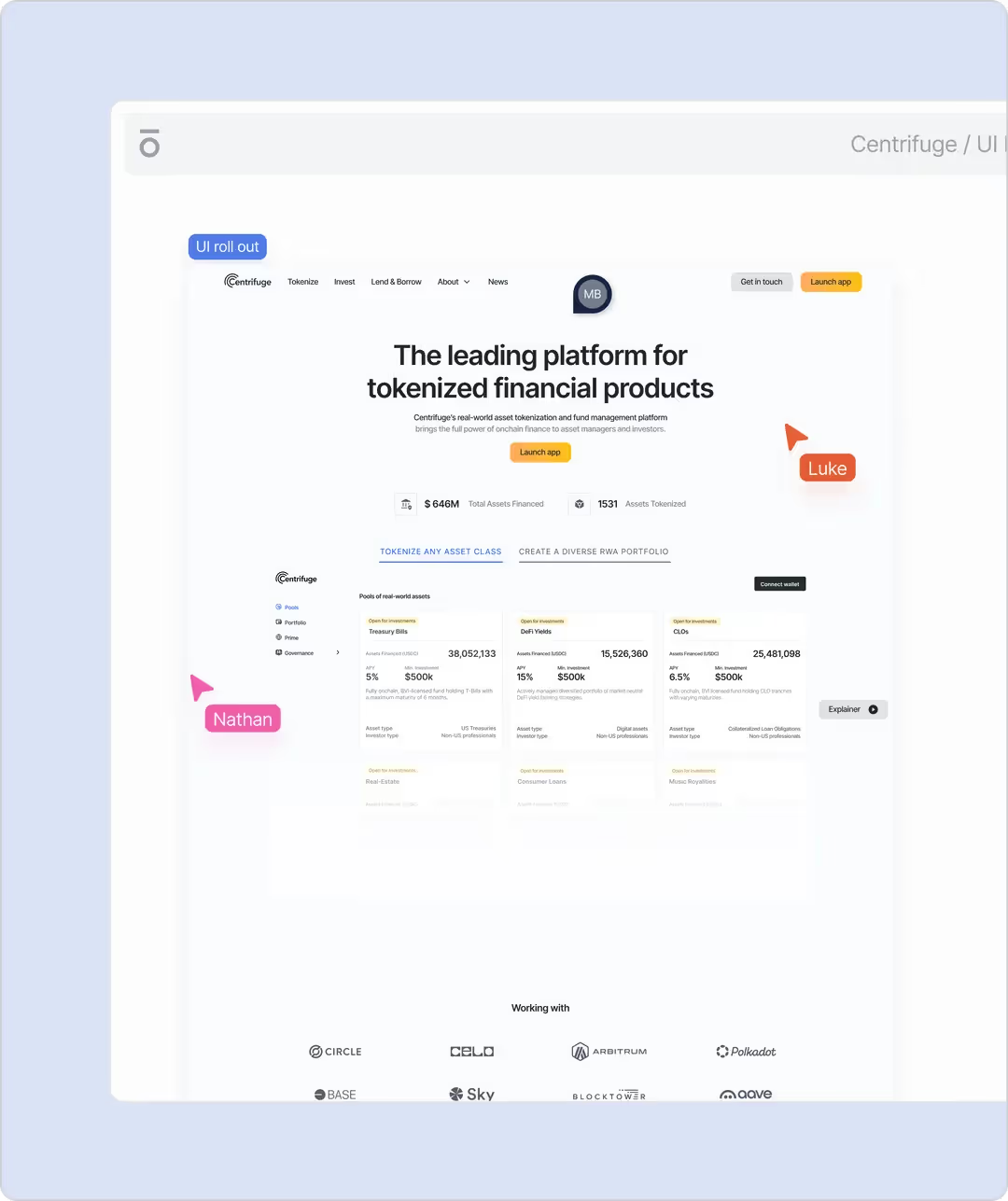
The strongest SaaS brands feel consistent because style and substance reinforce each other. A playful tone with ultra-corporate design or a serious tone with cartoonish visuals will feel off. Encourage founders to sanity-check:
- Does the UI experience reflect the promises made on the marketing site (speed, simplicity, power, etc.)?
- Do visuals and copy signal the same level of maturity as the product and ask (for example, enterprise buyers versus indie teams)?
This alignment matters especially on key conversion surfaces like pricing pages and onboarding flows, where misaligned style can quietly erode trust. This is particularly critical for complex solutions, where any mismatch between style and substance can undermine credibility and make it harder to build trust with decision-makers.
Get conversion audit
Step 8: Document the essentials in a lightweight brand kit
You do not need a 70-page brand book to launch, but you do need something shareable that keeps everyone from freelancing the brand. A simple “brand kit” in Notion, Figma, or a shared drive is enough. Clear and consistent brand documentation is essential for project management, helping project managers keep teams aligned and ensuring everyone works from the same guidelines.
This consistency is also crucial for running effective marketing campaigns, as it ensures all outreach and content reflect your brand accurately. Include:
- Brand foundations and positioning (the short version).
- Naming rules and how to write the product name, features, and plan names.
- Tone of voice traits with examples.
- Logo files, colours, type styles, and a handful of example layouts or components.
Step 9: Apply your brand to high-impact touchpoints first
A brand lives where customers actually experience it, so apply your new foundations to the places that move revenue and adoption most. For an early-stage SaaS founder, that’s usually:
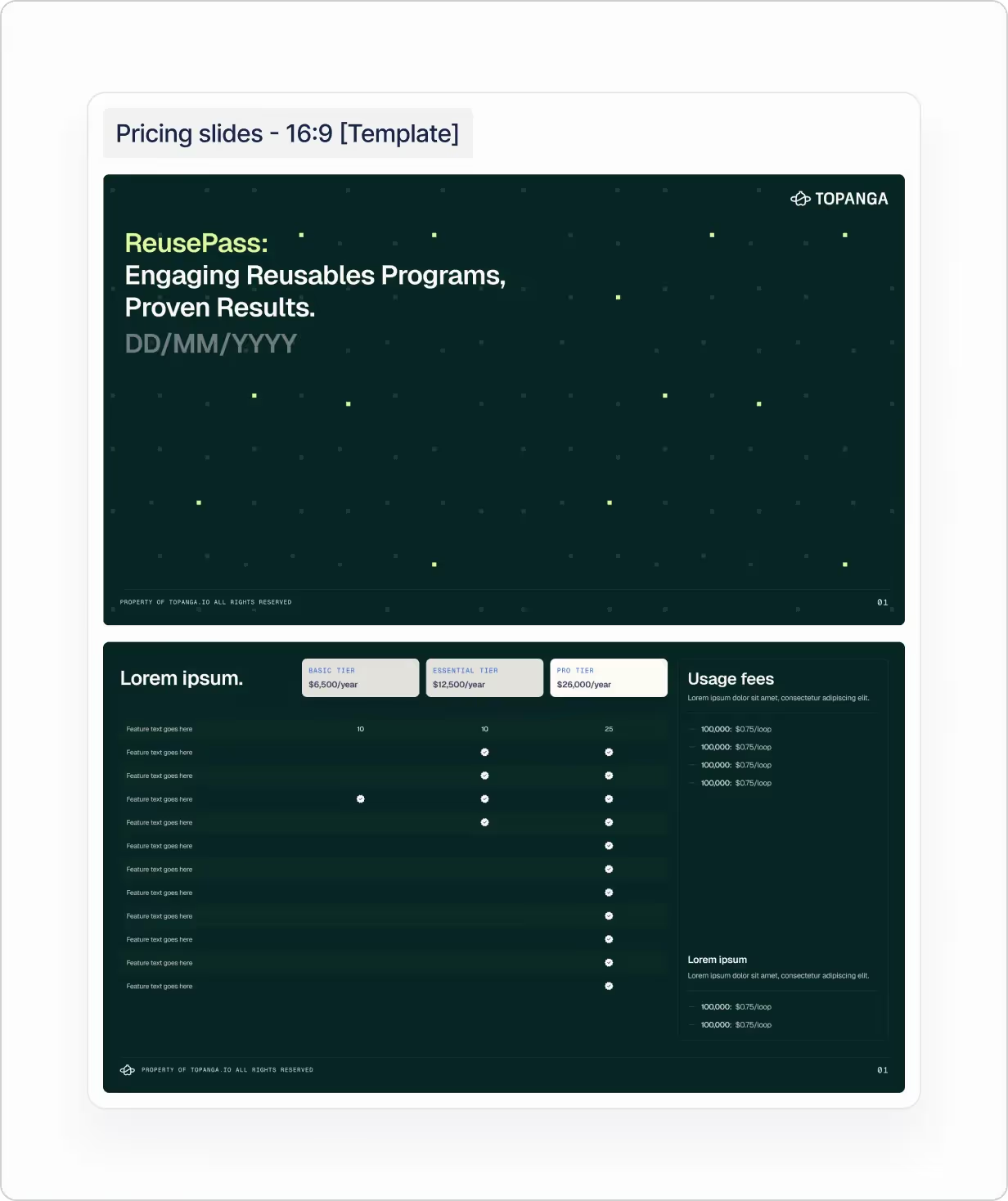
Website home and pricing pages
- Sharpened value prop, clear CTAs, aligned visuals and tone.
- Clearly communicate your pricing model, including tiered pricing, usage limits, paid plans, per user pricing, and your subscription based pricing model.
- Explain how customers pay for your software product, and highlight the flexibility of common SaaS pricing models to address the needs of potential customers, first customers, paying customers, and existing customers.
Product onboarding
- Language, microcopy, and help content that feel like the same brand, not an afterthought.
- Ensure your customer onboarding process introduces users to the core functionality of your minimum viable product.
- Engage early users and real users to gather feedback and collect valuable feedback, using these insights to iterate and improve the onboarding experience.
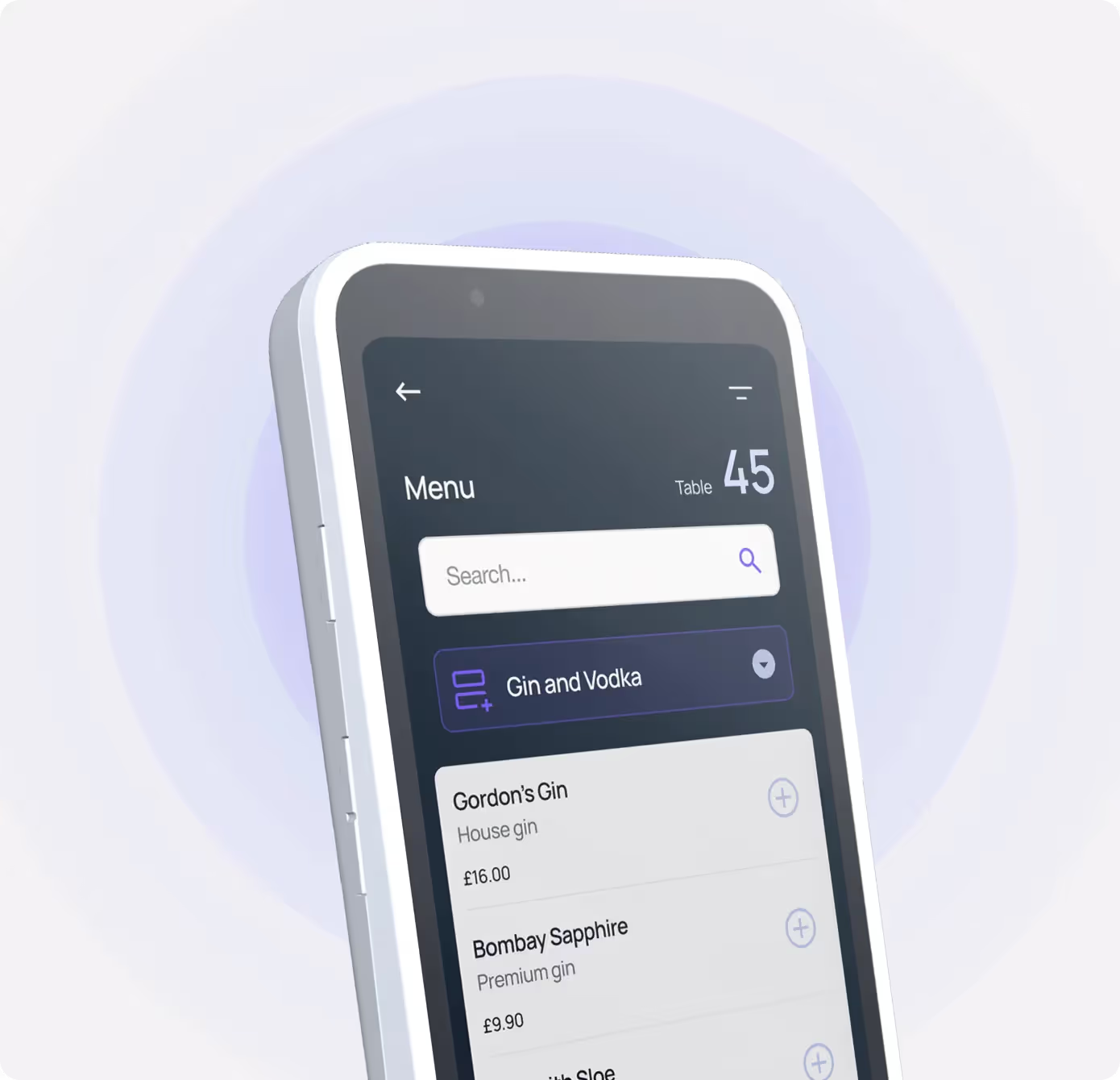
- Clear, creative product shots, to better showcase your product features.
Sales and investor materials
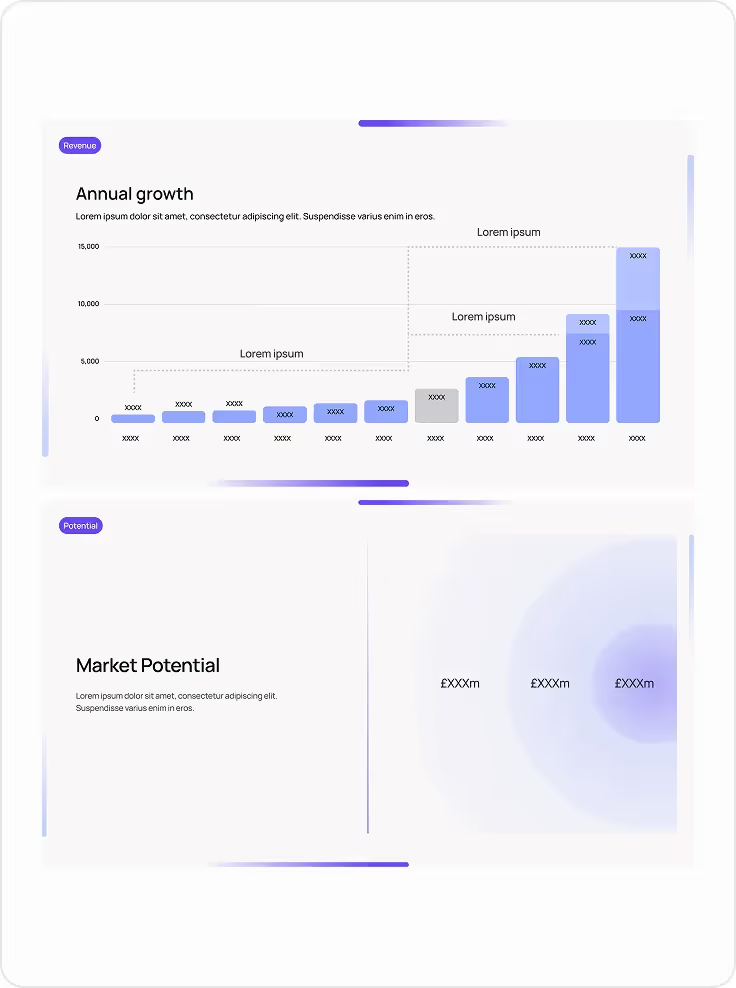
- Pitch decks, one-pager, and email templates that reflect your positioning and visual identity.
- Clearly communicate your approach to SaaS sales, customer acquisition, and customer acquisition cost.
- Highlight key SaaS metrics such as recurring revenue, monthly recurring revenue, annual recurring revenue, customer lifetime value, customer lifetime, and churn.
- Provide context about your SaaS solution, SaaS application, and the SaaS development and software development processes, including the role of software developers. Reference your experience with SaaS startups, SaaS companies, and the broader SaaS business landscape.
- Emphasize your business model, the importance of a solid business plan, making tech early decisions, compliance with industry regulations, and a commitment to data security.
- Contrast your approach with traditional businesses and position your offering within the global SaaS market.
Iterate on these surfaces with real feedback; brand is not a one-off project, but a living system that matures as you learn more about your users and market.
Quick reference: core brand elements
To make this easy for founders and other key players, the table below shows how the main pieces fit together and what “good enough for launch” looks like.
Approached in this order, brand decisions stop feeling like “paint” added at the end and become an operating system for how your SaaS looks, sounds, and sells from day one.
For powerful SaaS brand design, choose Overpass Studio
SaaS brand design from the ground up requires strategic clarity, design expertise, and consistency across dozens of touchpoints—all while you're focused on product development, fundraising, and customer acquisition. The frameworks in this guide give you the roadmap, but execution at pace demands specialised experience.
Overpass Studio specialises in translating your product strategy into brand systems that work across UI, marketing sites, pitch decks, and sales materials from day one. Overpass Studio brings specialised SaaS experience to every engagement, ensuring your brand doesn't just look polished, it actively supports your commercial goals and scales with your product roadmap.
Book a free brand design day
Get in touch