Your SaaS Product Launch Marketing Plan For 2026
Master your 2026 SaaS launch with this 3-phase marketing plan: pre-launch foundation, launch day execution, and post-launch growth. Read now.

A 2026-ready SaaS launch doesn’t start on launch day; it’s a 6–8 week sprint of structured hype, a sharp brand-led website, and a ruthless focus on learning from early users rather than a plan to “go viral” one morning with one Instagram post.
A SaaS product launch is the strategic introduction of a new software product to the market. With smart positioning, deliberate design, and scrappy distribution, a founder can ship a credible launch without a big marketing budget, especially when brand, website, and creative all pull in the same direction. Developing a go-to-market strategy and a comprehensive product launch plan is essential for aligning product development, marketing, and sales efforts to ensure a successful launch.
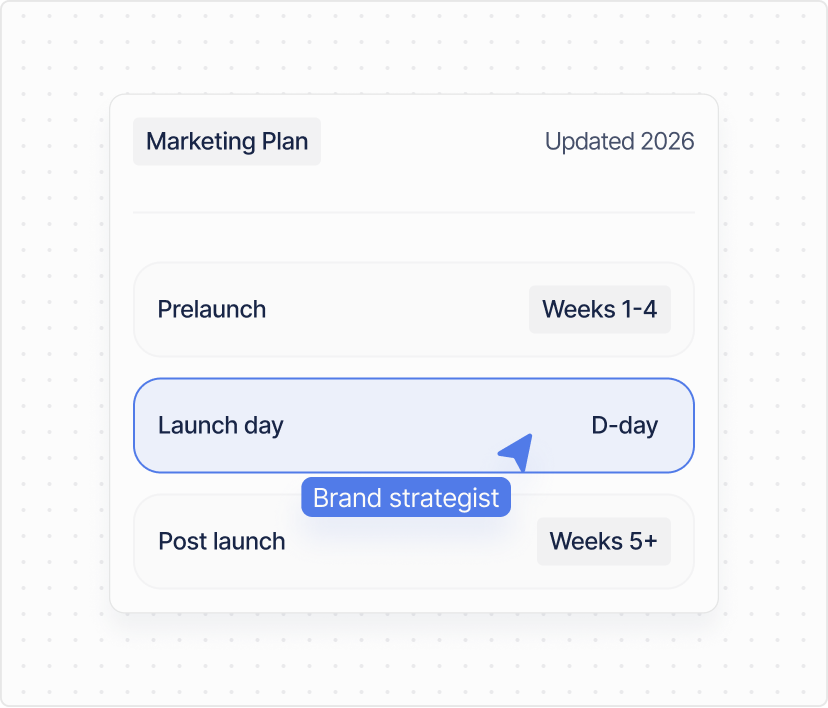
A product launch marketing plan is a three-phase promotion strategy to coordinate all paid and organic marketing campaigns aimed at creating product awareness, while a product launch checklist is a roadmap that outlines all the essential tasks and activities required to introduce a new SaaS product to the market.
This guide from our SaaS design agency walks you through the three critical phases of a successful 2026 SaaS launch:
- 30-day pre-launch foundation where you build positioning, brand identity, and early traction;
- Coordinated launch day that turns attention into signups; and
- 4–6 week post-launch period that converts initial momentum into sustainable growth through feedback loops, social proof, and content distribution.
Let’s dive in.
Your 2026 Launch Principles
In 2026, the SaaS launches that win tend to follow the same pattern: clarity → proof → amplification. Clarity is your positioning and messaging, proof is early users and social validation, and amplification is where channels and content do the heavy lifting.
Achieving clarity starts with conducting thorough market research and competitor analysis to understand your ideal customers, their needs, pain points, and how competitors are positioning themselves. This informs your positioning and messaging for maximum impact.
For a founder on a tight budget, three principles matter most.
- Design is strategy: Your brand, website, and creative are often the only “sales team” most prospects will ever meet.
- Distribution-first: Plan where and how you’ll reach users before obsessing over launch day theatrics.
- Learn-fast mindset: Optimise for signups, feedback, and retention, not for vanity metrics in week one.
After identifying your target audience, create user personas to represent different customer segments. This helps tailor your marketing strategies and product development to address the specific needs of each group.
When defining your unique selling proposition (USP), ensure your value proposition aligns with your user personas and directly addresses their most pressing problems. This approach strengthens your product’s appeal and sets you apart from competitors when most SaaS sites look the same.
Book a call today
Phase 1 – Pre-launch: Build Hype Without Burning Cash
Pre-launch is where most of the hard work happens; 30 days of deliberate energy here gives your launch a floor instead of simply hoping for a miracle. This pre-launch phase is foundational to the overall success of a SaaS product, setting the stage for everything that follows.
Aim to leave this phase with: a clear ICP, a waitlist or early access list, a message-market fit “good enough” to test, and a simple brand and content engine ready to distribute. During the pre-launch phase, beta testing is crucial for gathering user feedback from early adopters, allowing you to refine your product and ensure it meets user expectations before the official launch.
Your marketing team should focus on planning and executing targeted pre-launch marketing campaigns and marketing tactics to generate buzz and attract attention.
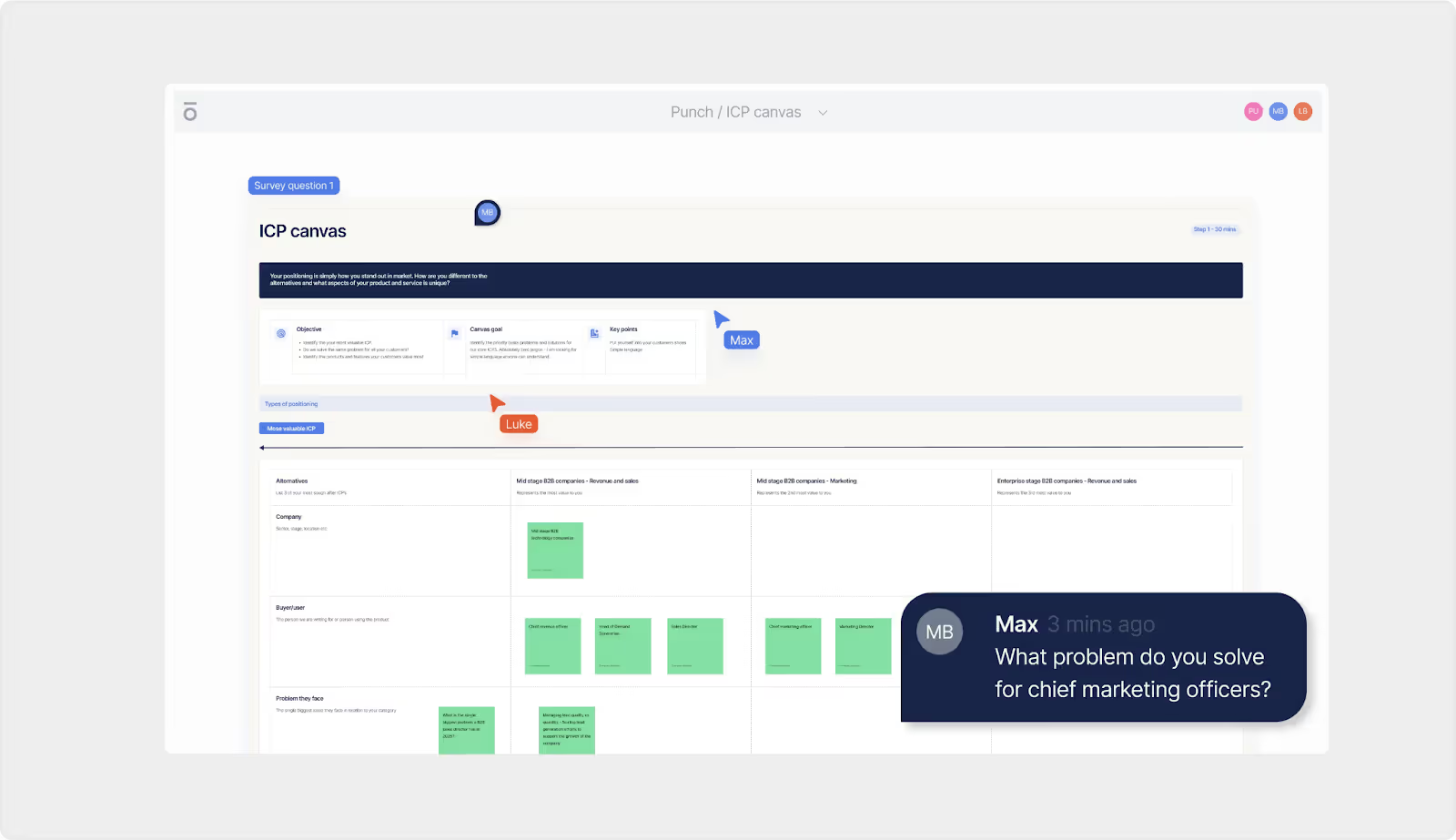
1: Positioning and messaging
Before anyone cares about your product, they need a concrete reason to remember it.
- Start by defining a tight ICP and the pressing, specific problem you solve for them. Don’t stretch into broader segments until you have real traction.
- Write a single, clear promise line that explains who it’s for, what the product does, and the immediate, tangible result it delivers. Avoid vague outcome claims like “save time” or “reduce costs”; instead, focus on 1st-order benefits: the direct, measurable improvements users will experience (e.g., “automates X process,” “eliminates manual handovers,” “reduces errors in Y workflow”).
- Create 3–5 supporting proof points that demonstrate how you deliver those tangible benefits. These can highlight specific product features, performance metrics, or real examples of improvement. Use this consistent set of proof points across your website, ads, and social channels to reinforce your product story.
2: Brand design that feels “launch-ready”
A "minimum viable brand" doesn't obsess or over invest in branding for launch. You can ensure that you look credible through professional branding that does not break the bank or launch budget.
If you need a brand suitable for launch and initial growth, our early stage brand sprint takes 3 weeks not 6 months! Overpass Studio brand design services focuses on sharp, simple systems founders can actually use.
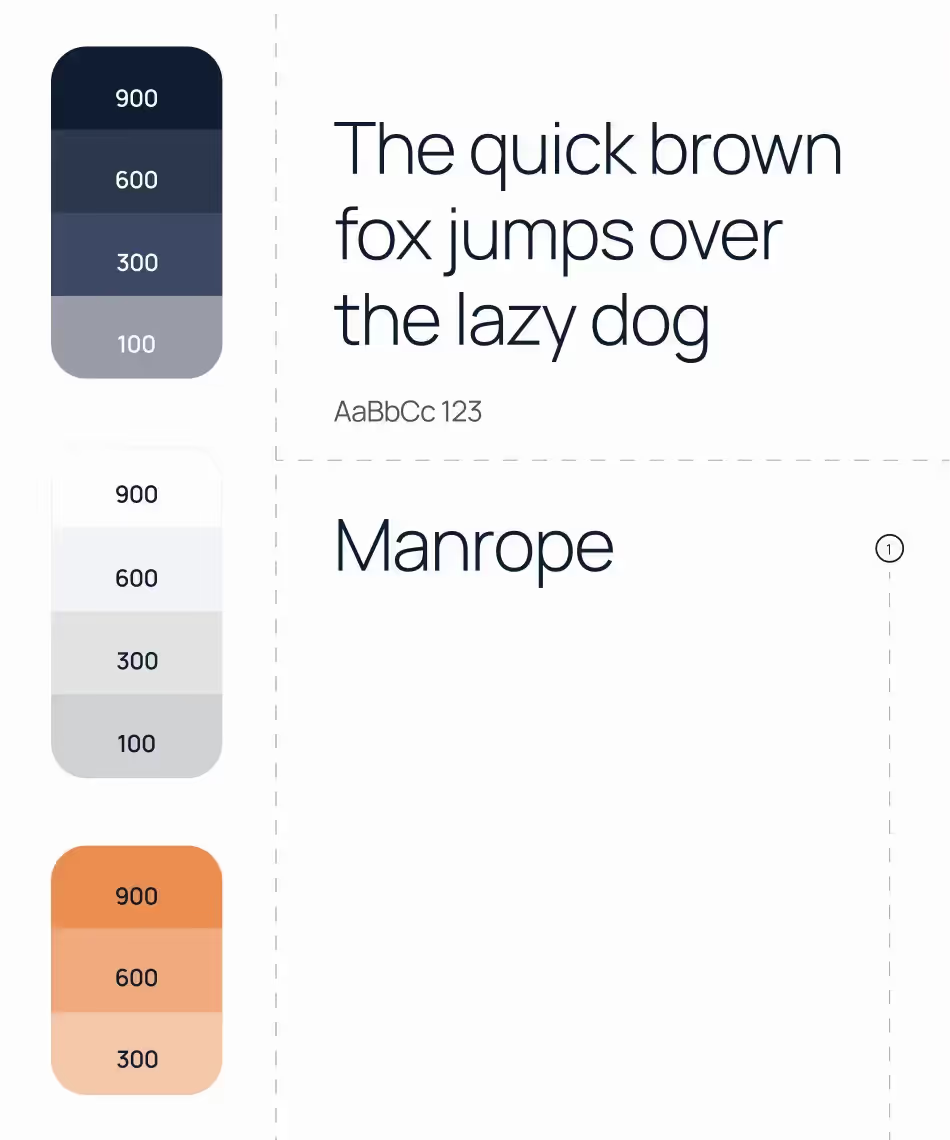
- Visuals: a minimal logo set, a tight colour palette with one primary accent, and a type stack that works on web and product.
- Voice: down-to-earth, jargon-light copy that mirrors how your customers talk in calls and communities.
- System: lightweight brand guidelines so everyone (founders, freelancers, AI tools) can create on-brand assets fast.
3: Website design: your launch HQ
Your SaaS web design is the backbone of the launch; it’s what every company reel, tweet, podcast, and DM response should line up with. High-performance, component-based sites (like the Webflow builds Overpass specialise in) let you move quickly and keep everything consistent.
At minimum, design for:
- One focused launch landing page: clear headline, sharp subheading, hero visuals that show the product, and a single CTA (join waitlist, start free trial, book a demo).
- Problem–solution storytelling above the fold, with social proof as early as humanly possible (quotes from betas, logos, or even “Built with X early users”).
- Component-driven sections: “How it works,” “Who it’s for,” “Outcomes,” FAQs—reusable slices you can clone for future campaigns.
Keep the UX friction-free: fast loading, mobile-first, and a short path from scan → understand → sign up.
4: Pre-launch content and creative
Think of pre-launch brand content as your trailers, not the whole movie. You’re trying to establish the problem and tease the solution.
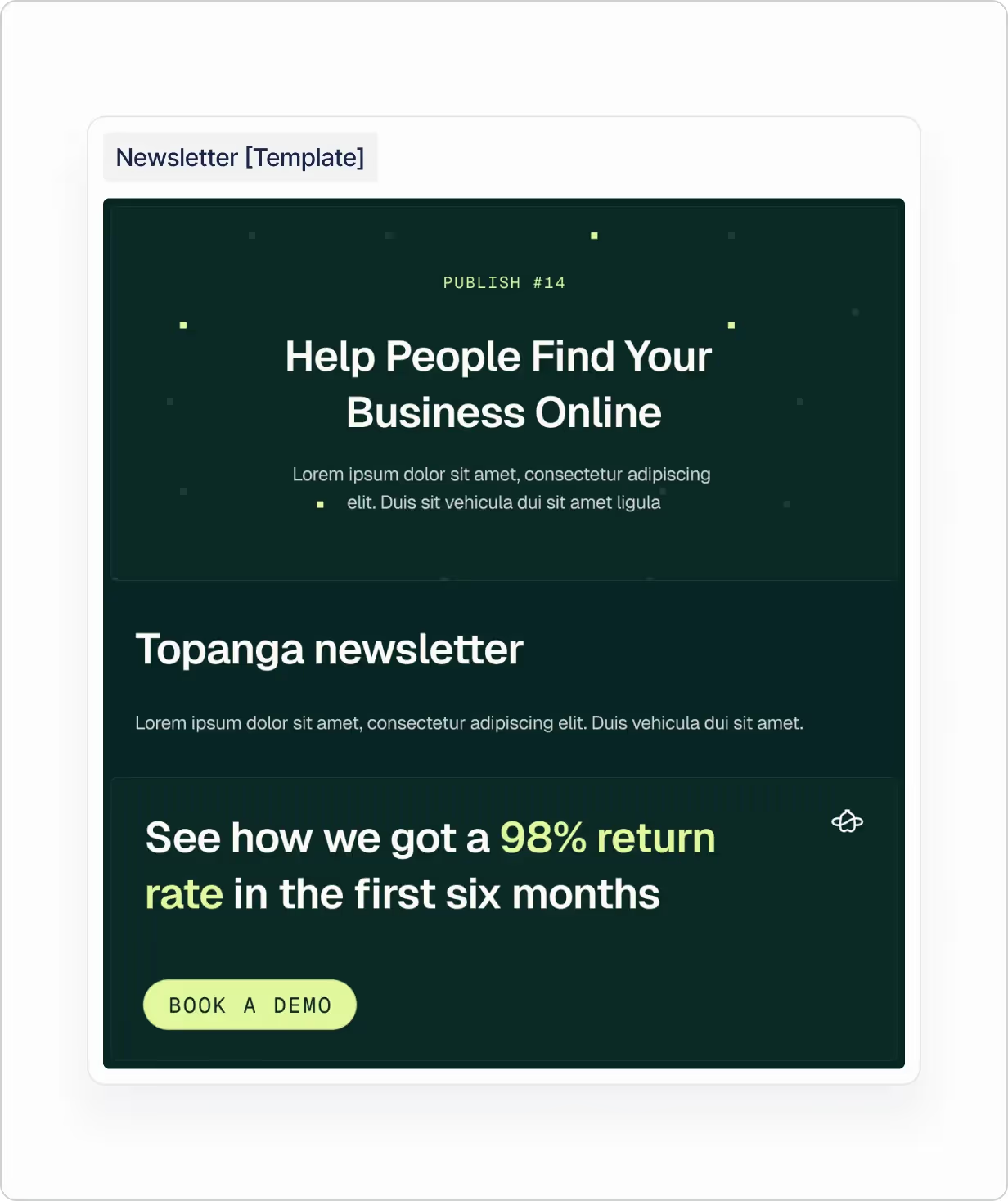
- Create 5–10 foundational pieces: problem explainers, teardown threads, short demos, or templates that naturally lead to your product.
- Repurpose aggressively:
- Turn one in-depth post into LinkedIn/Twitter threads, carousels, email snippets, and short video clips.
- Use a simple brand kit so creatives (thumbnails, diagrams, UI mockups) look unified and recognisable.
- Design-wise, aim for thumb-stopping but simple: bold type, strong contrast, product UI front and centre, minimal copy per asset.
5: Zero- and low-budget distribution
Most of your early traction will come from relationships and niche communities, not ads.
- Founder-led channels: consistent posting on LinkedIn and one other channel (X, Reddit, or a core community) about the problem space, not just your product.
- Communities: be genuinely useful in 2–3 Slack/Discord/Facebook groups where your ICP hangs out, then share your launch when it’s clearly relevant.
- Micro-collabs: guest sessions on small podcasts, joint webinars, or newsletter swaps with adjacent tools, trading expertise rather than cash.
Always drive people towards your waitlist or early-access signup, not just “check us out.”
Phase 2 – Launch Day: Orchestrate, Don’t Gamble
Launch day marks the initial launch and the beginning of the critical launch phase, with the launch date serving as a key milestone for your SaaS product. This is when all your pre-launch efforts culminate in a coordinated product launch campaign designed to generate buzz, drive lead generation, and build brand awareness.
A well-executed product launch phase is essential to ensure your SaaS solution enters the market successfully. To launch a SaaS product effectively, meticulously plan and coordinate every aspect of the process, from content releases to press outreach, so that the transition from pre-launch to launch is seamless.
Launch day should feel like hitting “publish” on a carefully prepared campaign, not throwing a product off a cliff and hoping it flies. The job is to concentrate attention, create social proof in real time, and make it absurdly easy to try the product.
1: Website and UX essentials
Your site and product experience will decide whether launch attention turns into signups and activation.
- Simplify flows: reduce signup fields, offer passwordless or SSO if possible, and focus onboarding on one core outcome, not every feature.
- Add contextual UX elements just for launch: banners, a “What’s new” page, and an embedded product tour or loom-style walkthrough.
- Monitor in real time: track where people drop off and fix obvious blockers fast in the first 24–48 hours.
2: Launch creative: consistent and clear
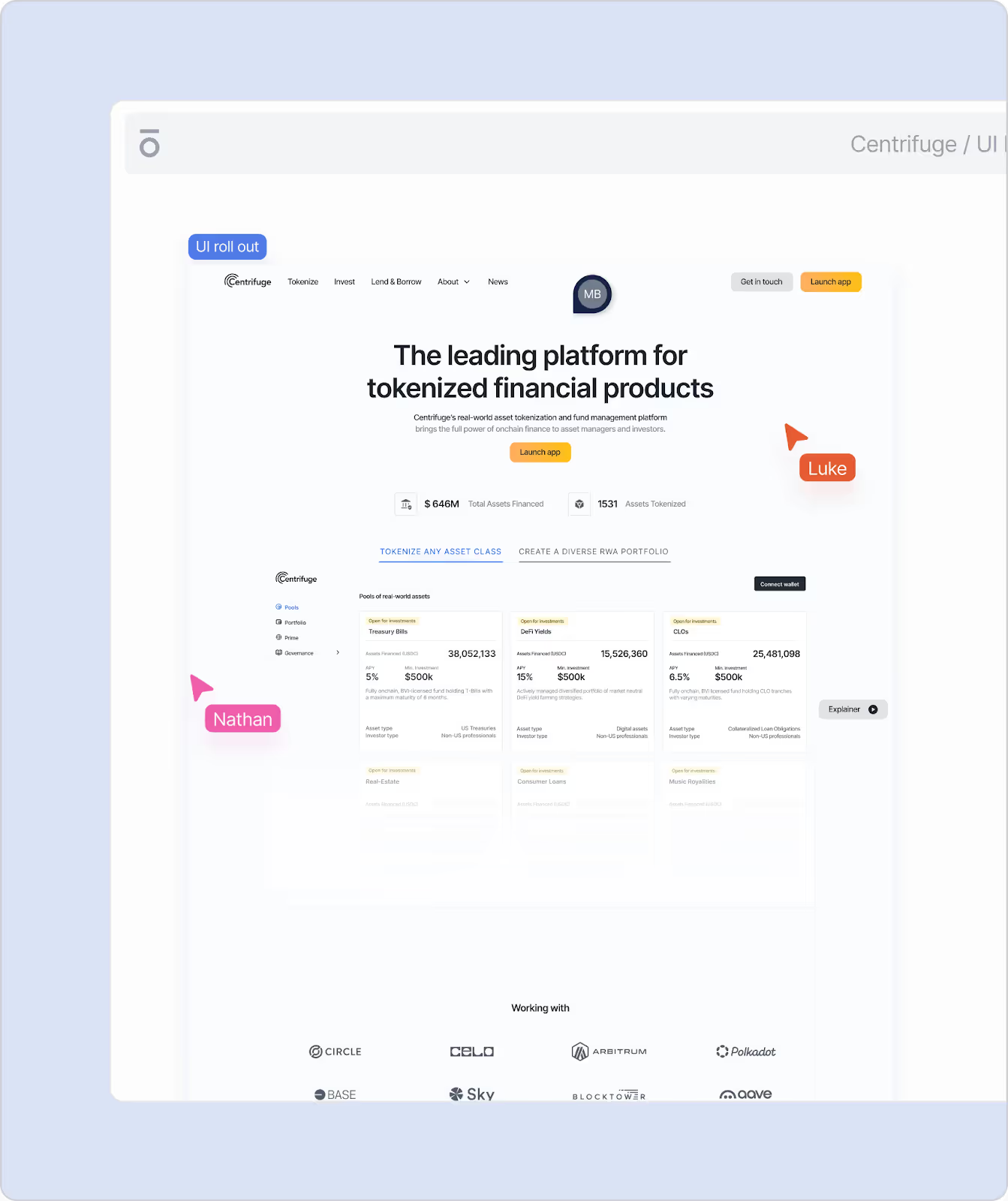
Design launch assets as a series, not one-offs, so your campaign feels intentional and your brand becomes memorable.
- Hero creative: one or two “flagship” visuals for launch day—social banners, email headers, and a hero image for the landing page using the same layout and visual language.
- Tone: Define a distinct voice that is clearly rooted in your product and company values, so the way you speak feels as considered as the way you look. Capture that voice in simple guidelines and examples, so anyone creating copy can keep it consistent across product, marketing, and support.
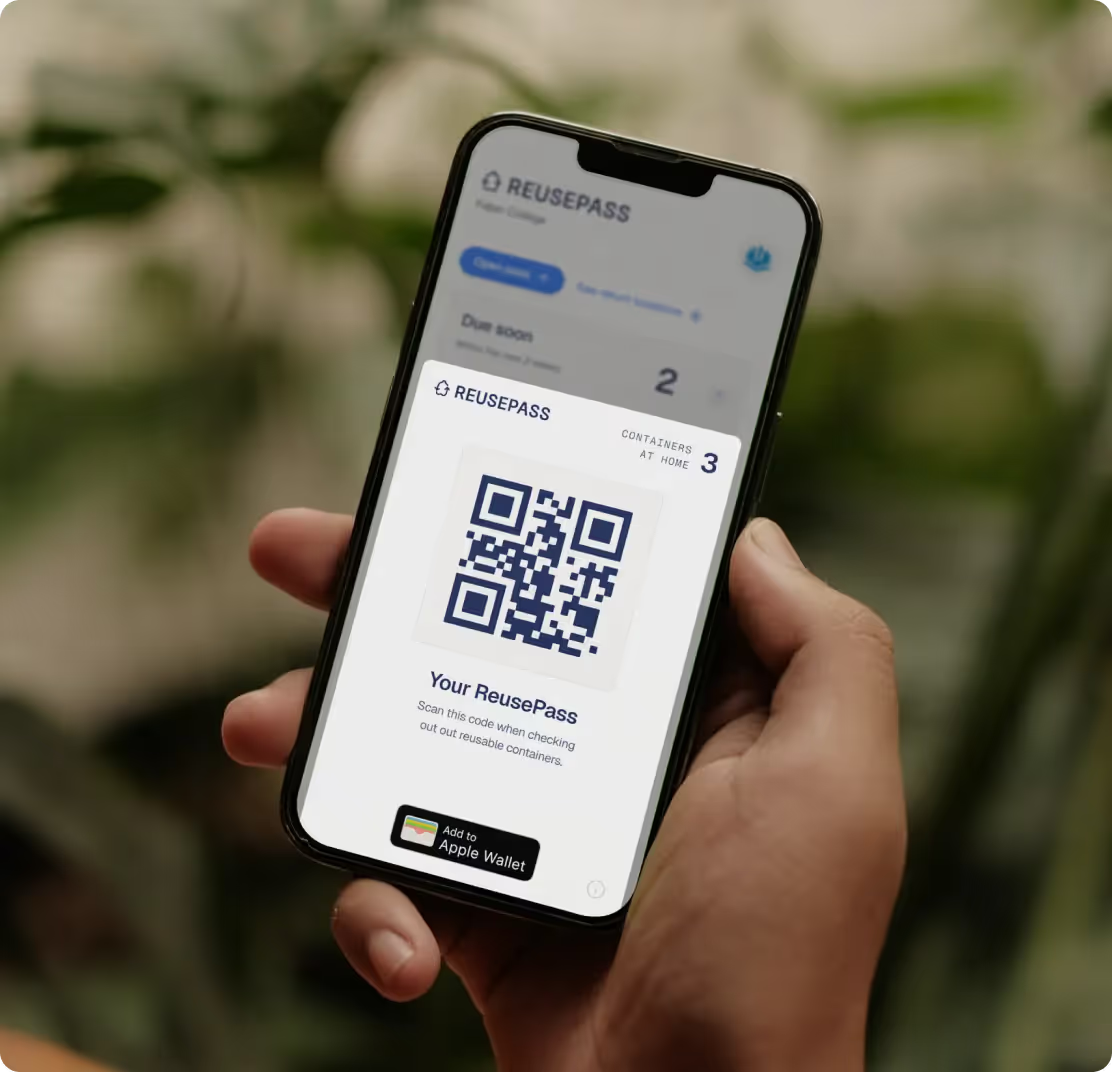
- Motion where it matters: high quality product shots or 10–30 second clips are usually enough to show the magic moment in the product.
3: Channel checklist for launch day
With limited time and budget, pick 3–4 high-impact moves and do them well. For a typical founder-led SaaS:
- Email: hit your list with a simple, benefit-led announcement, then a second email later that day or next with a “behind the scenes + roadmap” angle.
- Social: 2–3 posts on launch day—one story-driven, one product-demo focused, and one invitation to feedback (“Tell us what’s missing”).
- Communities: post in those 2–3 pre-nurtured spaces with clear, non-spammy context and a founder-led message.
- Optional launch platforms (Product Hunt, similar directories): only if you can commit to real engagement that day—commenting, answering questions, and thanking supporters.
Define success realistically: e.g., “20–50 quality signups, 5+ people using the core feature, and 3 concrete pieces of feedback,” not “trending everywhere.”
Phase 3 – Post-launch: Turn Spike into Momentum
Most launches fade within days because there’s no plan for week 2 onwards. The post launch stage is critical for optimising your newly launched product, enhancing customer experience, and driving sustained growth. A simple 4–6 week post-launch runway turns a spike of attention into a growing baseline.
Collecting and analysing customer feedback during this phase is essential for refining your product and addressing user needs, which helps build customer loyalty. Additionally, leveraging digital marketing strategies can expand the reach of your newly launched product and maintain momentum in the market.
1: Tight feedback loops and rapid iteration
Use launch users as co-designers of your roadmap.
- Run short feedback surveys and 15–20 minute user interviews focused on: what they hoped for, where they got stuck, and what would make them stay.
- Ship visible improvements weekly and share them publicly in a “changelog” or “What’s new” section on your site.
- Turn customer language into copy; update your website and onboarding to reflect how real users describe value.
2: Early proof: case studies and social proof
In 2026, social proof travels further than polished taglines. Even tiny wins are worth turning into stories.
- Create 1–3 lightweight case stories from your first happy users: problem → what they tried before → what changed with your product. Add these to your website as reusable components: cards, pull-quotes, and logo strips you can slot into any page.
- Encourage reviews and testimonials on relevant platforms, offering soft incentives like extended trials, roadmap input, or access to a private founder Q&A.
3: Content engine and ongoing distribution
Post-launch is when you turn your one-off launch campaign into a repeatable acquisition loop.
- Commit to a simple cadence: for example, one substantial piece per week (article, video, teardown) plus daily or near-daily short-form posts on your core channel.
- Build content around real usage: “here’s how one customer did X in 10 minutes” or “3 failed workflows we replaced for users like you.”
- Keep design modular: reusing the same layout structures, icon styles, and UI frames so every new asset strengthens brand recognition instead of diluting it.
We make your job easier image.
Product Launch Success Metrics and Monitoring
To ensure your SaaS product launch is more than just a one-day spike, you need to track the right key performance indicators (KPIs) from the outset. Monitoring metrics like customer acquisition cost, conversion rates, customer lifetime value, and retention rates gives you valuable insights into the effectiveness of your marketing efforts and the overall health of your product.
A well-defined launch timeline and a comprehensive product launch checklist are essential tools for keeping your team on track and ensuring nothing falls through the cracks. By regularly reviewing your KPIs, you can quickly identify what’s working, where you’re losing potential customers, and how to optimise your marketing strategy and sales team’s efforts.
Remember, launch success isn’t just about initial signups, it’s about building a foundation for sustainable growth. By focusing on the metrics that matter, SaaS companies can make data-driven decisions, refine their approach, and set themselves up for a successful launch and beyond.
Growth and Revenue Optimisation
After your initial product launch, the real work of growth and revenue optimisation begins. By continuously analysing user behavior, tracking KPIs, and gathering user feedback, you can uncover opportunities to refine your pricing model, enhance customer support, and improve the overall user experience. A targeted marketing plan that leverages social media platforms, Google Ads, and email marketing will help you generate leads, reach your target audience, and convert potential customers into paying customers.
Customer Satisfaction and Support
Customer satisfaction and support are the backbone of any successful SaaS product launch. A dedicated customer support team, equipped with the right customer relationship management (CRM) tools, can make all the difference in building trust, loyalty, and long-term customer lifetime value. By prioritising user feedback and analysing customer behavior, you can identify areas for improvement and ensure your SaaS product continues to meet (and exceed) customer expectations.
How Overpass Studio Design Ties It All Together
When brand, website, and creative content design are built as one system, every launch touchpoint feels like part of a coherent story. Overpass Studio’s focus on SaaS brands and Webflow-based marketing sites is precisely about giving founders launch-ready assets that can evolve as the product and messaging mature.
For a founder in 2026, the unlock is simple: treat design not as “decoration after the build,” but as the connective tissue between your product, positioning, and distribution. That’s how a SaaS brand can still look sharp enough to raise capital, convert strangers, and turn one launch into the first chapter of a category-defining story.
Book a call today
Get in touch