Webflow vs HubSpot: The Complete Guide for B2B and SaaS
Discover the ultimate Webflow vs HubSpot guide for B2B & SaaS. Find out which platform fits your growth needs. Dive in and choose wisely!

Picking the right platform to launch your B2B SaaS company can be a pretty tough call. It's less about which tool has the most bells and whistles, and more about what kind of growth engine do you want to build. The decision is going to impact how well you're able to communicate with your online users, so you want to get it right if you want to create a great user experience and attract organic traffic through search engines.
Both Webflow and HubSpot are two big options that cater to different aspects of your company's growth, and making the right choice between them comes down to whether you need a blank canvas to work off of or a toolbox to help you build a website.
If you want a website that feels like a flexible space to showcase your brand, then Webflow is a good bet. It gives you the design freedom and speed you need to get things done, and agencies like us here at Overpass use component-based builds so your team can actually manage it on a day-to-day basis.
Webflow is actually considered one of the top website makers for creative projects. If you want a more locked-in control panel for CRM and marketing automation, then HubSpot is a good choice, but it's not necessarily where your best SaaS storytelling lives. Each platform serves its purpose, with HubSpot integration facilitating streamlined processes, including being able to embed Hubspot forms seamlessly for campaign management.
This article is going to dive into the differences between the two, the pros and cons of each, and help you figure out which one is the best option for your SaaS product design.
Book a Webflow demo call
B2B SaaS web design: The battle between Webflow and HubSpot
Let's be real here, examining Webflow and Hubspot requires understanding how they fit with your needs. Webflow shines with its design capabilities and flexibility, making it a top choice for design-heavy projects in B2B SaaS website design. On the other hand, HubSpot excels in CRM features, providing seamless marketing automation that's essential for lead generation and customer retention. Consider the importance of branding strategies in all of this.
The selection really depends on what your startup is all about. If creative, responsive design is your priority and your visual identity is going to shine, then Webflow is the way to go. But if you need centralised marketing efforts with integrated CRM functionalities and CRM integration, then HubSpot is a better fit for getting a new site launched.
Let's break down the pros and cons of each platform, starting with Webflow.
Why Webflow wins for design-led SaaS companies
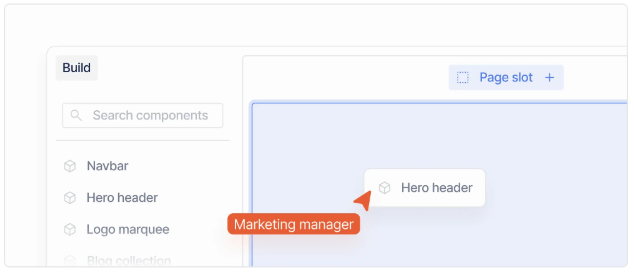
In our experience, Webflow offers unparalleled creative freedom, which is especially beneficial for B2B SaaS companies looking to stand out with a unique online presence. Its no-code interface lets teams quickly turn ideas into responsive designs that enhance user experience design, and Webflow automatically generates clean code that's optimised for search engines, which is great for visibility.
This platform's strength lies not just in its customisable templates (which are a big plus in our book) but also in supporting SEO best practices, so your site ranks well from the get-go. You can incorporate user feedback to make things even better, which contributes to conversion rate optimisation.
- Creative freedom without losing your mind: We build on Webflow using scalable component systems, so you get custom layouts that still feel easy to update and support effective marketing campaigns.
- Speed to market: Entire website transformations in under 12 weeks are realistic, not just a pipe dream, because Webflow changes what "dev time" looks like, which is crucial for agile marketing teams.
- Less dev dependency: If your team can use a word document, they can update copy, images and pages in Webflow without waiting weeks for engineering. This is a huge boon for busy marketing teams.
- Future-proof for SaaS: Nearly half a million companies now use Webflow, with adoption rising faster than any other CMS. So you're not betting on some fringe tool. This makes Webflow a strong contender in the webflow vs hubspot cms debate, especially with its built-in SEO tools.
Want to see how this plays out in practice? Overpass’s Webflow development service centres on a component-first build, QA’d with a two-step approval process and backed by post-launch support. Webflow even offers completely free plans for basic needs, making it an accessible choice for smaller teams.
No platform is perfect, though. Let's explore where Webflow might fall short.
Webflow's potential challenges
While Webflow's design flexibility is unmatched, it does present a steeper learning curve, especially for those new to web development. At first, it can be a bit overwhelming. Customisation depth can be daunting at times, requiring an understanding of how different design characters interact - which is pretty much in line with good, old-fashioned, human-centered design principles.
- Design complexity: Its features are pretty impressive but demand time to master. Effective design implementation and technical SEO knowledge are vital. A/B testing different design elements can help streamline this process, especially when managing various website visitors.
Given all that, you might want to take a closer look at HubSpot's features if you're a startup that needs something that'll tie together marketing and CRM in a single package. However, you can have all the benefits of Webflow and Hubspot if we integrate the two for you, as integrations are a big part of the ongoing maintenance we offer.
Book a call to get the conversation started
Pros of Hubspot for integrated marketing
HubSpot's a real all-in-one marketing hub, with a strong focus on customer management and lead generation through its built-in CRM and marketing automation tools. It's a no-brainer for businesses that rely heavily on social media, content and seo to get in front of their audience.
- CRMs that just work: HubSpot really delivers when it comes to customer data, user onboarding and lead gen - all key components of SaaS marketing. It's also got security and compliance down pat, so you can rest easy.
- Marketing automation on steroids: With HubSpot, you get streamlined marketing workflows that help you nurture leads and track customer journey mapping like a pro. Plus, its partnership with Google Analytics and other seo tools gives you some seriously in-depth analytics to work with.
But let's not get too carried away - it's also worth taking a hard look at some of HubSpot's downsides.
The downsides of using HubSpot for B2B SaaS
Now, don't get us wrong - HubSpot's CRM and marketing automation features are all top-notch, but the cost? It adds up, and you can expect to pay top dollar for those advanced features as your business grows. That can be a real strain on resources, especially if you're a small team or startup trying to keep costs down.
- A pricey beast: HubSpot's pricing model can get a bit out of hand as your company scales, so bear that in mind when you're looking for that perfect marketing solution to boost your SEO.
- The Complexity conundrum in small-scale operations: Despite being a comprehensive suite of tools, HubSpot can become a cumbersome beast for smaller teams focused on agile operations - and that's crucial when building a business website from scratch.
Considering these factors, the decision between Webflow and HubSpot becomes a whole lot clearer when examined through specific SaaS scenarios.
Webflow vs HubSpot for specific SaaS use cases
Here’s how the platforms stack up for typical B2B SaaS scenarios.
Choosing between Webflow and HubSpot - our decision guide
It all comes down to what you need and where you want to be in the future. Here are some tips to keep in mind.
- Get a handle on your team's skills: If your team is all about coding and design, then Webflow gives you free rein to get creative. If you'd rather have everything in one neat platform, HubSpot's all-in-one setup is a no-brainer.
- Think about your scalability needs: Where do you see your company in the future? The ideal platform should meet your current needs while also scaling with your future ambitions.
- Decide what's your "Source of Truth": If your website is your primary sales and storytelling engine, a Webflow-first build is probably the way to go. If your CRM and email are the core, then HubSpot can play a much larger role with its marketing teams.
- Prioritise speed to ship: If you need to launch or iterate quickly without waiting on engineering, Webflow's visual builder and component systems give you faster feedback loops than a heavier CMS - that's the kind of agility every business needs.
- Balance design freedom vs. governance: Webflow lets you do almost anything design-wise; HubSpot offers more - shall we say - "best practices". Choose based on how much experimentation your team actually wants (and can handle).
- Factor in the total cost of ownership: Don't just look at subscription pricing - consider dev time, redesign cycles, and the cost of moving platforms later if you outgrow rigid templates.
- Think about your tech stack: If you're already using HubSpot as your CRM, pairing it with a Webflow front end can give you the best of both worlds via integrations, rather than forcing HubSpot to be your CMS too.
For tailored advice, Overpass Studio is here to help.
Webflow as your growth home base, HubSpot as a power add-on
For Seed–Series B SaaS, Webflow is usually the best place for your main marketing site, with HubSpot sitting neatly in the background as the CRM and automation layer - the perfect support for marketing teams with SEO tools on board.
- Webflow gives you fast build cycles, reduced developer dependency, and the design freedom to do what you want - without wrestling rigid templates.
- HubSpot shines once you're capturing and nurturing leads - but using it as your primary CMS often means sacrificing design and paying more as you scale seats and features.
The sweet spot? Webflow as the front door to your brand, HubSpot powering CRM, forms, and workflows from behind the scenes; exactly the kind of setup Overpass implements for growth-stage SaaS teams. And, with the ability to create custom meta titles, your SEO strategy can be more finely tuned to get that extra boost.
Book a Webflow demo call
Summary and key takeaways
Choosing between Webflow and HubSpot can have a profound impact on your B2B SaaS company's growth trajectory. Let's distill the insights into clear takeaways.
- Webflow's Design Edge:
- It offers unmatched design flexibility and aesthetic freedom - perfect for companies that need to stand out.
- Ideal for companies that are all about a strong, stand-out visual identity.
- You'll get the most out of it if you have a good grasp of web design intricacies.
- The Power of HubSpot's CRM and Marketing Tools:
- Offers a one-stop-shop for generating new leads and managing customer relationships - and does a pretty good job of keeping all those customer interactions straight.
- Will work best for companies that want a single platform to handle all their marketing needs and build out some solid email marketing campaigns.
- The thing is though - it can get pretty pricey, especially as your company starts to expand.
Partnership and collaboration - How Overpass Studio Can Help
Think about your company's strengths and weaknesses, and what you're really trying to achieve. Do you want to knock people's socks off with some top-notch design? Or use integrated tools to really get to know your customers? The right platform will give you the courage to take the leap and really start seeing some growth.
By the way - if you're also in the market for a new CMS, you might want to check out our comparison guide to Webflow vs WordPress.
At Overpass Studio we're all about building custom Webflow sites for sales-led B2B and SaaS that are aligned with your brand and conversion goals, and that really deliver on your design and CRO (conversion rate optimization) ambitions. Our flexible subscription model brings in a whole team of experts - from strategy and design to dev, content and project management - without breaking the bank.
What we do at Overpass Studio is pretty straightforward: we help you get a measurable impact; a return on investment with speed and efficiency. What would it take for you to elevate your brand and take your inbound marketing to the next level?
Book a call with us to find out how our expertise in Webflow can help your business really take off. And if you want to get a better handle on the platform yourself, you might want to check out Webflow University - it's a great resource to get your team up to speed.
Book a Webflow demo call
Get in touch