How To Write SaaS Copy That Converts
Learn how to write SaaS copy that converts with 10 actionable principles from 60+ B2B SaaS launches. Drive results today.

People think that websites sell products and services. They don't. Words do.
A website is a container. Copy is what fills it: what persuades, reassures, and moves a potential customer from curious visitor to qualified lead. When one client relaunched their B2B SaaS website design with restructured web copy and a clearer value proposition, they saw visitor-to-lead conversion improve from 3.16% to 3.92% (a 24% improvement) without changing a single pixel of the design. The words made all the difference.
At Overpass Studio, copywriting is never separate from design. Over seven years and 60+ B2B SaaS launches, we've learned exactly what makes copy that converts, and what wastes the budget. This is our guide on how to write copy that actually drives results, covering social ad copy, landing pages, website copy, and the underlying principles that connect them all.
Whether you're writing ads for a paid campaign or restructuring a homepage for better conversion rate performance, the principles are the same. Start with your reader, not your product.
Book a free consultation
What is conversion copywriting?
Conversion copywriting is the practice of writing copy that is designed to drive a specific reader action: a sign-up, a demo request, a purchase, a click. It's distinct from brand copywriting (which builds awareness) and editorial copywriting (which builds authority). Conversion copy has a job. It focuses on turning visitors into customers.
The most important part of conversion copywriting is understanding that you're writing for a reader who is scanning, sceptical, and time-poor. A visitor decides whether to stay on a landing page within three seconds. If your headline doesn't grab their audience's attention and communicate clear value immediately, they're gone.
Conversion copywriting focuses on driving specific reader actions, not describing products, not showcasing features, not demonstrating technical depth. The single most effective shift you can make is to replace feature language with benefit language. Benefits answer the question "what does this mean for me?" Features describe what a product does. This distinction makes all the difference to your conversion rate.
Clear and simple language enhances understanding and engagement. Specific claims are more credible and persuasive than vague statements. Both truths underpin every word of effective conversion copy. Both are consistently underestimated by B2B SaaS teams who are too close to their own product to write for their customer.
For tactical application to your SaaS website specifically, see our guide: How To Optimise a Webflow Website For SaaS Conversions
How to write copy that converts: 10 principles from 60+ B2B SaaS launches
These aren't abstract writing tips. They're the principles we apply at Overpass Studio every time we write copy for a B2B SaaS client, across websites, LinkedIn ad assets and brand decks.
1. Write one message per page
The biggest mistake we see in B2B SaaS copy is trying to say everything at once. Every page should carry one message, directed at one ICP, prompting one specific action. When you try to speak to everyone, you speak to no one. One page. One message. One desired action.
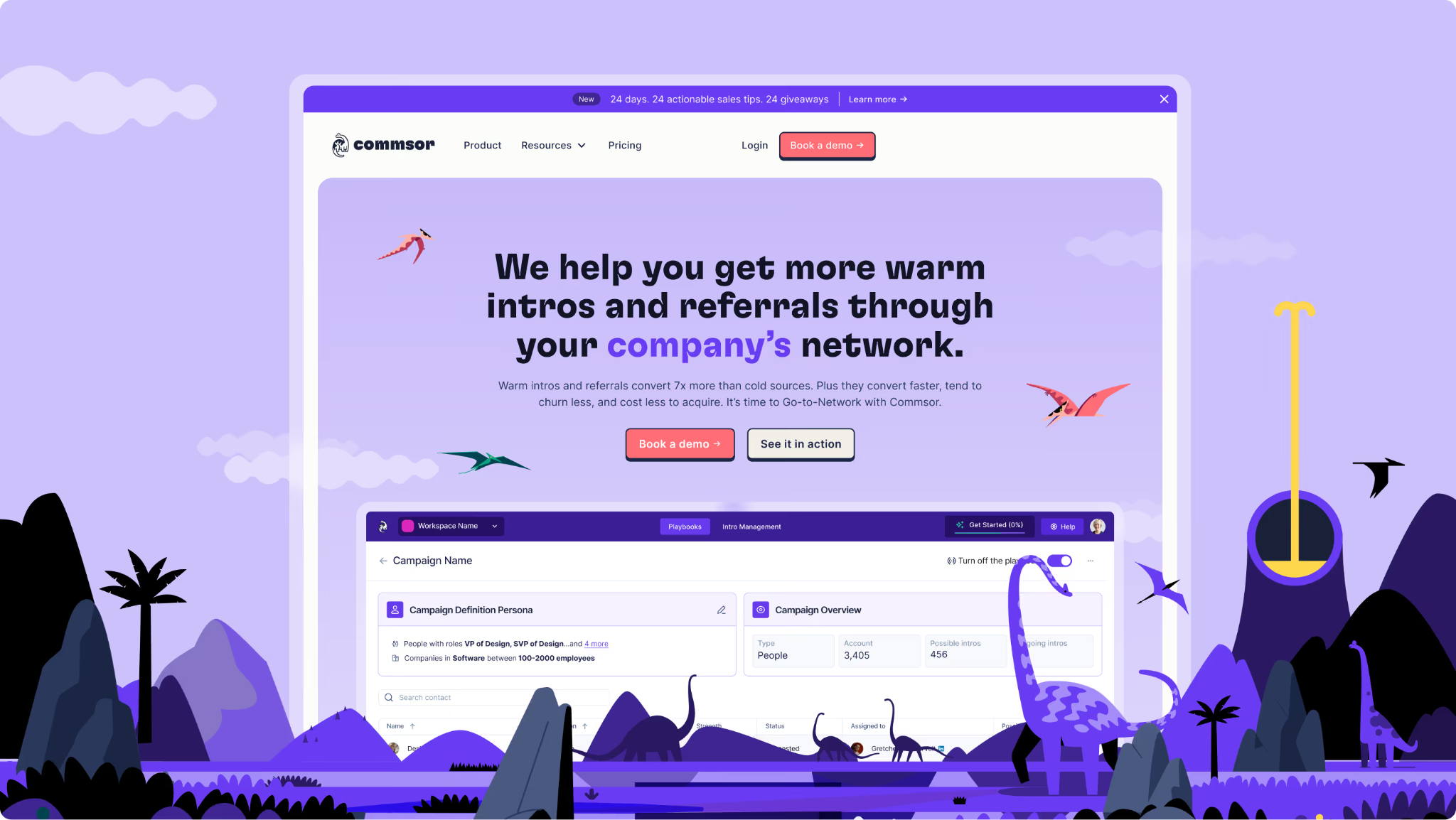
When we worked with Commsor, the go-network platform that helps companies make warm introductions through their existing network. Their website had grown organically over three years. Multiple value propositions competed on every page, diluting the core message. We rebuilt each page around a single, focused idea.
Mac Reddin, Commsor's founder, described the result: "Our CMO described it like someone truly knew our brand and had found the right ways to improve it." That's what one clear message does.
This same way of thinking applies to every touchpoint, from a LinkedIn ad to a landing page to an email subject line. The moment you add a second idea, you halve the impact of the first.
2. Lead with your reader's pain points, not your product's features
Your reader doesn't care about your product. They care about their problem. Start with the pain, then offer the resolution. This is the principle behind the AIDA formula (Attention, Interest, Desire, Action), and it's why speaking directly to your reader's frustrations in the headline is one of the fastest ways to improve both ad and page performance.
Highlighting pain points connects emotionally with potential customers in a way features never can. The more specifically you can name the pain, using your audience's own language, the more persuasive your copy becomes. "We help you manage HR admin" is a feature. "Stop spending 4 hours a week on spreadsheets that break every payroll cycle" is a pain point. The second one converts.
3. Write headlines that grab attention in three seconds
A visitor decides to stay on a page in three seconds. Your headline is doing all the heavy lifting in that window. Keep headlines concise, ideally under 40 characters. Compelling headlines grab immediate attention and communicate value, for instance, "24% more leads from the same traffic" outperforms "we help you grow." Subheadings can reinforce the main headline's message without repeating it.
A good headline is a promise. Your body copy and landing page exist to prove that promise. If your headline is vague, no amount of good stuff in the body will save your conversion rate.
For a deep-dive into headline strategy for B2B SaaS specifically, read: How to Write Compelling SaaS Homepage Headlines.
4. Make body copy earn its place
Most body copy describes what a product does. High-converting body copy describes what a product allows the reader to do. Swap "our software automates reporting" for "spend 3 hours less per week on manual reports." Body copy must focus on benefits as well as features, because the reader is always asking "so what does that mean for me?"
Keep paragraphs short for better readability. Use bold text to surface your most important points for skim readers. Use bullet points to enhance the scannability of your copy. White space is not wasted space. It makes body copy easier to absorb and keeps the reader moving toward your call to action.
Body copy that converts isn't long or short. It's exactly as long as it needs to be to answer the reader's question and move them forward. Not a single word more.
5. Place social proof where doubt is highest
Social proof increases trust in your product or service. Testimonials can significantly boost conversion rates, but only when placed at the right moment in the reader's journey. Don't cluster all your social proof at the bottom of the page where only committed readers will see it.
Put social proof immediately after your claims. When you say "our clients see a 24% improvement in lead conversion," back it up with a named quote in the next paragraph. Using logos from happy customers enhances credibility and signals legitimacy to cold audiences. High-level case studies serve as effective social proof for complex B2B purchasing decisions. Social proof can include quotes from satisfied customers, metric-backed results, and recognisable brand logos. Each plays a different role in the conversion journey.
You can read what 40+ of our clients say about working with us on our testimonials page.
6. Write calls to action that prompt a specific action
A call to action should tell your reader exactly what to do next and what they'll get. "Get started" is a call to inaction. "Book a free website audit" tells the reader what happens, what they'll receive, and that there's no cost. Use action verbs like "get," "start," "discover," and "book." Effective calls to action should clearly state the next step for readers, specifically the action you want them to take and the outcome they'll receive.
Every page, every LinkedIn ad, every landing page needs a clear path to a single conversion action. When you give readers multiple calls to action, they often take none. Pick one. Make it obvious. Make it feel low-risk.
For conversion rate optimisation that goes beyond copy, covering landing page structure, funnel design, and A/B testing. Our CRO service applies a hybrid analytical and design-led approach to improving lead quality and quantity from your B2B SaaS website.
Free website audit | Book a call
7. Match copy to your marketing funnel stage
Cold audiences (visitors who've never heard of you) need copy that establishes the problem and builds credibility. Warm audiences (visitors who've engaged with your LinkedIn ads or site before) need copy that reduces friction and handles objections. Writing ads for cold audiences without acknowledging this gap is one of the most common and costly mistakes in B2B paid campaigns.
Your marketing funnel shapes every word you write, from the LinkedIn ad someone sees first, to the landing page they arrive at, to the follow-up email they receive. Keep the message consistent at each stage and the copy relevant to where that reader is in their decision. Speaking directly to a cold audience with bottom-of-funnel conversion copy will lose them immediately. They're usually not ready.
8. Use white space and structure for scannability
Use bullet points to enhance the scannability of your copy. Use white space between sections. Use bold text to surface key information. Effective copy should have a clear information hierarchy, with the most important information appearing first and supporting detail available for those who want it.
Good copy structure lets a skimming reader grasp your value proposition without reading a single full paragraph. This is especially important on landing pages and service pages, where highly targeted readers may only spend 15 to 20 seconds before deciding whether to engage further.
9. Avoid jargon and big words
Clear and simple language enhances understanding and engagement. Avoid jargon. Avoid big words when a single word will do the same job. "Utilise" means "use." "Leverage" means "use." "Synergise" means nothing a customer will connect to their problem. Avoid jargon: it signals that you're writing for yourself instead of for your reader.
The best conversion copy reads like a conversation with your smartest customer, confident, clear, and specific. "Save 5 hours a week" beats "save time." "Join 60+ SaaS teams" beats "join a growing community." Specific claims are more credible and persuasive than vague statements. Every single word should earn its place.
10. Test, learn, and test again
High-converting copy is often the result of iterative testing rather than with the first draft. A/B testing improves copy by comparing two versions: keep everything the same, change one variable, measure the result. Testing different headlines can lead to higher engagement rates. Effective copy testing requires measuring specific conversion goals: sign-ups, demo requests, trial activations rather than vanity metrics like page views.
Start writing. Publish. Measure what converts. Refine. Test again. The first draft is a hypothesis. The fifth draft, shaped by data, is copy that converts. Continuous testing improves copy effectiveness through A/B testing strategies. The compounding effect of incremental improvements to your conversion rate adds up faster than any single redesign.
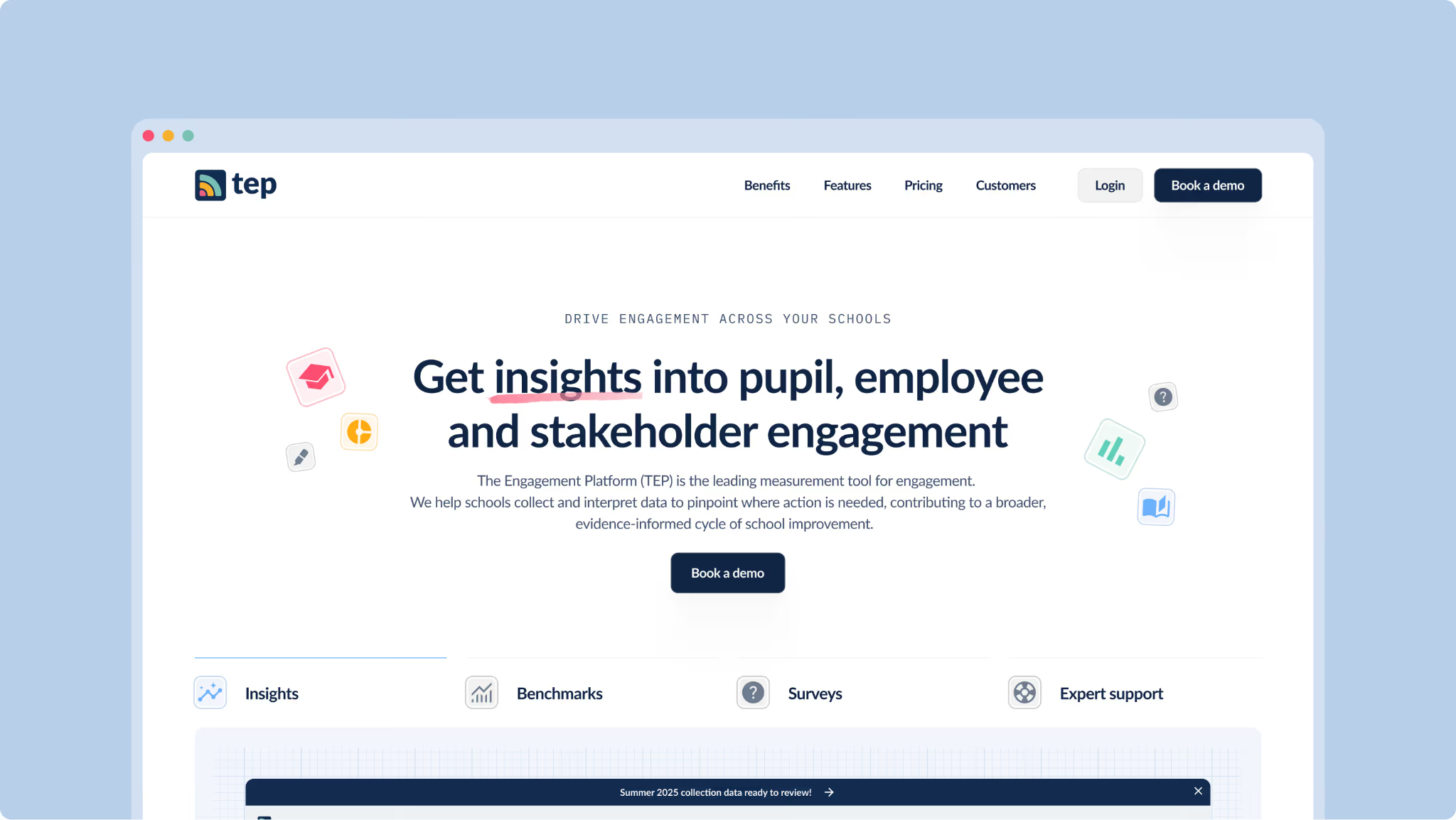
How to write high converting paid social ad copy
Organic and paid social ad copy operate differently from web copy because they compete with everything else in a user's feed. You're interrupting someone's scroll. That changes the rules entirely. What works on a landing page (detailed benefits, longer body copy, social proof quotes) often fails as a business ad for cold audiences.
Here’s what will work:
- Your headline is your hook. For cold audiences on LinkedIn (or Facebook ad copy for smaller businesses), your headline needs to create immediate, attention-grabbing relevance: a specific pain, a surprising stat, or a direct challenge to a common assumption. If your headline doesn't stop the scroll, your ad’s body copy will never be read.
- Short form copy outperforms long copy for cold audiences on ads. Most ad platforms collapse body text after the first line on mobile. Your reader needs a reason to tap "see more" before they'll read anything else. The first sentence of your ad body copy is doing the same job as your headline. Treat it accordingly.
- Social proof works better as a statistic than a quote in social ad copy for cold audiences. "Join 60+ B2B SaaS teams who've improved their conversion rate" converts better than a customer testimonial that requires context to be meaningful. Cold audiences haven't earned the context yet.
- Social ad copy for cold audiences should focus purely on the problem and the outcome. Don't mention features. Don't describe your process. Don't include pricing. State the pain, state the outcome, and give a clear path to a landing page that continues the same conversation.
- Test every ad without exception. Run two versions of every social ad: one leading with a pain point, one leading with an outcome. Measure click-through rates and landing page conversion rates together, not in isolation. An ad that drives clicks to a high-converting landing page is performing well. An ad with high click-through but low landing page conversion is attracting the wrong audience.
For warm retargeting audiences, you can introduce more detail, address specific objections, include named client testimonials, and link to case study content rather than a generic landing page. The copy rules for social ads to warm audiences are closer to landing page copy, because these readers already know who you are.
At Overpass, we design paid ad creative for B2B SaaS clients as part of our content design subscription, covering assets for ads, social media templates, sales decks, and marketing material. The best ads we've produced always combine a visually distinct creative with a single, sharp message in the copy. Separating the two doesn't work.
If you're running ads to multiple audience segments simultaneously, programmatic landing pages allow you to match your ad copy to a dynamically personalised landing page, improving conversion rates for highly targeted campaigns without maintaining dozens of separate pages.
How to write website copy that converts
Writing website copy is different from writing a landing page or an ad. A website must work across multiple reader types, funnel stages, and entry points. Some visitors arrive from a Google search knowing exactly what they need. Others arrive from a referral and have never heard of you. Your copy must serve both, and everyone in between.
Lead with clarity at every entry point. Your homepage hero section is your most important conversion asset. Treat it like the headline of a social media ad for cold audiences. It must communicate what you do, who it's for, and why it matters in under ten seconds. Every SaaS website that fails to convert usually fails here: the hero is vague, features-led, or talks about the company rather than the reader.
For B2B SaaS websites specifically, the copy principles that drive conversion are: specificity of outcome, clarity of audience, and evidence of results. Every service page should answer three questions: who is this for, what does it do, and why should I believe you? "We help SaaS companies grow" answers none of them. "We redesign B2B SaaS websites to improve visitor-to-lead conversion, with a 24% improvement as our benchmark" answers all three.
Your brand voice must be consistent across every page of your website. The tone you use on your homepage should carry through to your pricing page, your about page, and your blog copy. When brand voice breaks (when the homepage sounds bold and the service pages sound corporate), visitors feel the disconnect. They may not articulate it, but they lose confidence in the brand.
Blog copy is a different discipline. Blog copy establishes authority, surfaces organic search traffic, and builds trust with readers who are not yet ready to buy. The same copy principles apply (clarity, specificity, benefits over features), but the job of the page is to educate and build confidence, rather than to immediately convert every time. Treat every blog article as the first impression a cold audience has of your brand.
What is an example of good ad copy?
Here is an example of effective ad copy for a B2B SaaS company, written for cold audiences:
"Most B2B SaaS websites are losing 70% of their visitors to poor copy. We redesign your homepage hero in 5 days, free. Join 60+ startups who've already improved their visitor-to-lead conversion rate."
This example works because it opens with a specific, credible pain point (traffic loss from poor copy), states the mechanism (hero redesign), removes risk (free, 5 days), and backs the claim with social proof (60+ startups). The audience's attention is hooked by the number. The social proof closes the credibility gap. The desired action is implicit and would be made explicit in the ad's call to action button.
Compare this to commodity ad copy: "We help SaaS companies with website design. Get in touch today." No pain, no specificity, no social proof, no reason to act. The same offer, delivered without conversion copywriting principles, produces a different outcome entirely.
The difference between these two examples is the difference between ad copy that drives clicks and ad copy that costs money. It's usually not the design, the placement, or the budget: it's the words. That's why copywriting is still the highest-leverage marketing investment a B2B SaaS brand can make.

How Overpass Studio approaches conversion copywriting
Over seven years and 60+ B2B SaaS launches, we've built a clear view of what makes copy that converts: specificity of outcome, clarity of audience, evidence of results, and a brand voice that feels irreplicably yours. These aren't top tips you read once and forget. They're principles we return to on every project, every page, every ad.
If your website is generating traffic but isn’t converting it into leads, our CRO optimisation service is the right starting point, applying a hybrid analytical and design-led approach to improve both the quality and quantity of SQLs from your B2B SaaS website.
If you need ongoing content design support (social media channel ads, social media templates, pitch decks, sales material), our content design subscription gives you access to a senior B2B design team from £3,600 per month, with a 48-hour task turnaround and a dedicated creative director who understands your brand.
You can see the full range of our work across B2B SaaS brands (websites, branding, and content), or book a call to discuss what copy that converts looks like for your specific product, audience, and growth stage.
Free website audit | Book a call
Get in touch