How Do UX Designers Contribute to the Function of an App?
88% of consumers are less likely to return to a site with bad UX, but we think it can have bigger implications.

UX designers contribute to app function by structuring information, defining user flows, and removing friction from every interaction between the user and the product's core value.
According to Forrester Research, every £1 invested in UX returns up to £100 in product performance, making UX one of the highest-ROI disciplines in SaaS development. Research published by Baymard Institute and replicated across multiple SaaS conversion studies shows that the vast majority of users who experience significant friction in a digital product do not return, and those losses are not attributable to a competitor's features: they trace directly to friction points that a UX designer's work exists to eliminate.
This article will cover:
- The functional role of UX design in app development
- How UX drives app conversion and retention metrics
- The processes designers use to create equitable products
- The measurable ROI of strategic UX investment
Need UX, web or product design? Book a consultation
What Role Does UX Design Play in How an App Works?
UX design determines how users move through an app and whether they reach the outcome the product promises. Visual design decides what an interface looks like. UX design decides whether it works. The distinction matters for B2B SaaS products in particular, where a confusing onboarding flow or an unclear navigation structure can increase time-to-value by days, raise support ticket volume, and reduce trial-to-paid conversion directly.
Figma's collaborative canvas model is a strong example of functional UX driving product success. Before Figma, design tools required file-based sharing that introduced version conflicts and access delays. Figma's UX decision to make the canvas a live, shared URL reduced a workflow friction point that previously required dedicated project management to manage. The UX contribution there was not cosmetic: it was the primary differentiator that shifted the design tool market.
What Does a UX Designer Actually Do During App Development?
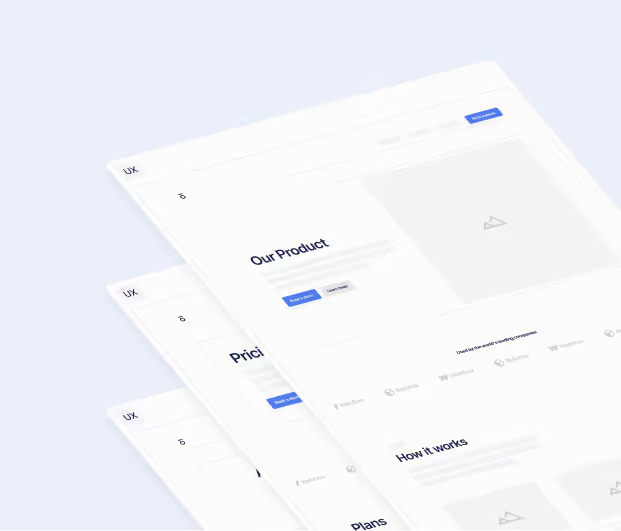
A UX designer maps user journeys, conducts usability research, produces wireframes, and iterates on interaction patterns based on behavioural data. These are functional outputs that directly affect conversion, retention, and feature adoption rates.
The primary deliverables from a UX designer during app development include:
- User journey maps that show every step a user takes from onboarding to the core feature
- Wireframes that establish hierarchy and interaction logic before visual design begins
- Usability testing protocols that identify where users abandon flows
- Information architecture documents that structure how content and features are organised within the product.
In B2B SaaS, where the buying decision often involves 6 to 10 stakeholders and the product must demonstrate value to users at different levels of technical sophistication, UX design bridges that gap. Intercom's onboarding flow, for example, routes users through a branching experience based on their role (sales, support, marketing) rather than serving a single linear walkthrough. That routing decision is a UX architecture choice that directly improves feature adoption because users reach relevant functionality faster.
How Do UX Designers Make an App More Equitable?
UX designers make apps more equitable by applying accessibility standards that ensure users with different physical, cognitive, and technical capabilities can complete the same core tasks. WCAG 2.2 (Web Content Accessibility Guidelines) provides the technical framework: contrast ratios, keyboard navigation, screen reader compatibility, and focus state visibility are all UX implementation decisions, not developer decisions.
Apple's VoiceOver feature demonstrates how accessibility-first UX design extends a product's addressable market rather than limiting it. VoiceOver was designed for users with visual impairments and became a product feature used by a much broader group including users operating devices in hands-free contexts (driving, cooking, exercising). The UX decision to build full navigational capability into audio feedback created value for audiences the original brief did not anticipate.
In B2B SaaS, equitable UX reduces procurement risk. Enterprise buyers in regulated industries (healthcare, financial services, public sector) require WCAG compliance as a procurement criterion. A product that fails an accessibility audit loses deals at the procurement stage, not at the demo stage.
How Does UX Design Affect App Conversion and Retention?
A well-executed UX design increases website and product conversion rates significantly. Research across B2B SaaS deployment studies shows improvements of up to 400% when UX friction is systematically removed. The mechanism is direct: when users encounter fewer decision points that require effort, they progress further through conversion flows. Every piece of copy that needs deciphering, every step that requires unexpected input, and every navigation structure that does not match user mental models adds abandonment risk.
Uber's core UX contribution to its app function illustrates this precisely. Before the live map, pricing estimate, and one-tap booking flow existed, ride-hailing apps presented users with forms, phone-based confirmation, and ambiguous wait times. Uber's UX team identified each of those friction points and eliminated them in sequence. The product was not technically different from a taxi booking service: the UX made it behaviourally frictionless.
Does UX Investment Deliver Measurable ROI?
Yes: Forrester Research data shows that companies investing in UX design consistently achieve stronger retention metrics, with a 5% improvement in user retention translating to a 25% increase in profitability. The ROI comes through three channels: reduced support cost as users self-serve more successfully, higher trial-to-paid conversion as onboarding friction falls, and longer customer lifetime value as the product becomes embedded in daily workflows.
At Overpass Studio, UX design is embedded in our website design process from the wireframing stage onward. When we designed the product UX for Caide, a sales intelligence tool for creative agencies, discovery research revealed their users needed a kanban-style layout familiar to campaign managers rather than the linear enterprise dashboards standard in the category. That single architecture decision shaped every subsequent interface choice. For Centrifuge, a fintech SaaS communicating real-world asset tokenisation, a 3-month redesign programme combined elevated UX with stylised product shots to make a technically complex subject accessible to a sophisticated but non-specialist audience.
Our CRO optimisation service applies behavioural data to identify and remove functional friction in B2B SaaS interfaces, with one recent engagement delivering a 24% improvement in visitor-to-lead conversion (from 3.16% to 3.92%).
How UX Designers Approach App Function in B2B SaaS
B2B SaaS UX design follows a structured process:
- Discovery research
- Information architecture
- Wireframing
- Usability testing
- UI design handoff
- Post-launch iteration
Each phase produces specific outputs that feed directly into development.
Discovery research defines the user groups, their technical context, their goals within the product, and the jobs they are hiring the product to do. In B2B SaaS, this often surfaces a misalignment between what the founding team assumed users need and what users actually attempt to do first in a trial. Fixing that misalignment at the wireframe stage costs hours. Fixing it after development costs weeks.
Information architecture (IA) organises all features and content into a structure that matches how users think about their work, not how engineers organised the codebase. Poor IA is the most common structural cause of high bounce rates on product feature pages and low feature discovery in complex SaaS platforms.
Usability testing at the wireframe stage, before visual design begins, prevents the most expensive category of design rework. Testing with 5 representative users identifies the majority of critical usability issues in a flow, a threshold established by Nielsen Norman Group research going back to 1993 and confirmed repeatedly in subsequent studies.
How Does UX Design Relate to Product Shots and Marketing Pages?
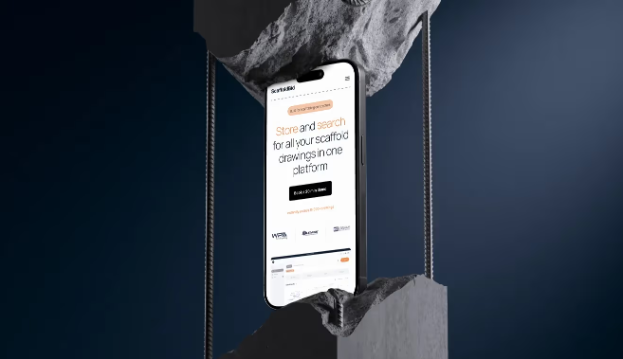
UX design principles extend beyond the product itself into how the product is presented on marketing pages, including the visual assets used to communicate function to prospective buyers. A product shot on a SaaS marketing page is a UX artefact: it communicates what the product does, reduces the cognitive load of evaluating an unfamiliar interface, and builds purchase confidence before a trial begins.
Overpass Studio's web and product design services and product shot service applies UX principles to how B2B SaaS products are visualised for marketing contexts. Product shots designed with UX intent (showing the user flow clearly, reducing interface noise, contextualising the core feature) convert at higher rates than decorative screen grabs because they answer the same question a UX designer answers in onboarding: what does this product help me do?
Need UX, web or product design? Book a consultation
FAQs
Get in touch

![7 Best Landing Page Design Agencies [With Reviews]](https://cdn.prod.website-files.com/63f4f8b3637ca34b3b597dcd/6972206f4a7f922c730f7b66_max-brown.avif)